
Guilt-Free Desserts
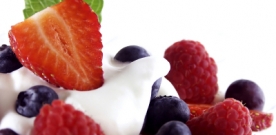
Go head, eat dessert! Six tips for serving light and healthy desserts.
By: Jodie Shield, RDN
After a long, hot, and busy day, nothing tastes better than a cool, refreshing dessert. Go ahead and let your family indulge, especially if it’s healthy. Before everyone digs in, here are a few pointers to keep in mind. And be sure to check out my iTunes app Time To Eat Healthy. It’s jam-packed with healthy homemade meals and desserts you can make in minutes.
Work it in. Desserts should complement the meal by adding nutritional value. Most of the time, you should try and offer desserts that count as a serving from one or more of the MyPlate food groups – Fruits, Vegetables, Grains, Protein, and Dairy. For example, an ice cream cone would count as a serving from the Milk Group (ice cream) and Grain Group (cone). Some of my favorite light desserts include: gelato, Cappuccino Ice Cream Pie, and Mini Peach Cobbler.
Practice portion control. Keep an eye – rather than a fork – on portion sizes. All desserts, even fat-free frozen yogurt and angel food cake have calories. If you’re buying dessert, always read the package label to see what’s considered a serving size, and eat accordingly. Or, if you’re preparing a homemade dessert, check the recipe for how many servings it makes so you don’t overindulge. When offering preschoolers dessert, remember smaller children tend to have smaller appetites, so offer them about half of a portion you would serve yourself.
Focus on fruit and fiber. A great way to minimize added sugar and maximize nutrients is to offer your child desserts made with fruit (like apples, raisins, strawberries, and bananas) and whole grains (like oatmeal and whole-wheat flour). A couple of my favorite recipes are: Blueberry Crisp. DIY Applesauce, Patriotic Parfaits.
Maintain equality. Many registered dietitian nutritionists (RDN), including myself, discourage parents from using dessert as a reward – something that can be eaten only “after you finish your vegetables.” It’s good to emphasize that all foods are important when eaten in moderation. And according to the research food reads A.K.A, bribes backfire. Kids end up wanting the healthy food even less than before!
Cut back. Find ways to cut extra calories from your favorite desserts without losing the fabulous flavor. As a rule of thumb, you can cut the total amount of fat in a recipe by reducing the butter or oil by one-third and the amount of sugar by one-fourth without affecting the taste.
Keep ’em moving. No matter what type of dessert your family eats – whether it’s cake or frozen yogurt – make sure everyone gets plenty of physical activity every day. This will help burn off excess energy and prevent weight gain. Encourage your child to go outside and ride a bike, shoot hoops, or jump rope. Whatever gets them away from the TV or computer screen, and keeps him moving, is fine. And as parents, be a role model and join them.

Comment (1)
Leave a Reply
Healthy Eating App


Healthy Eating eBook

Nutrition Blog Network
Editor-in-Chief

Jodie Shield, MEd, RDN
posted by burn fat on December 14, 2013
You should take part in a contest for one of the finest websites on the internet.
I am going to recommend this blog!